
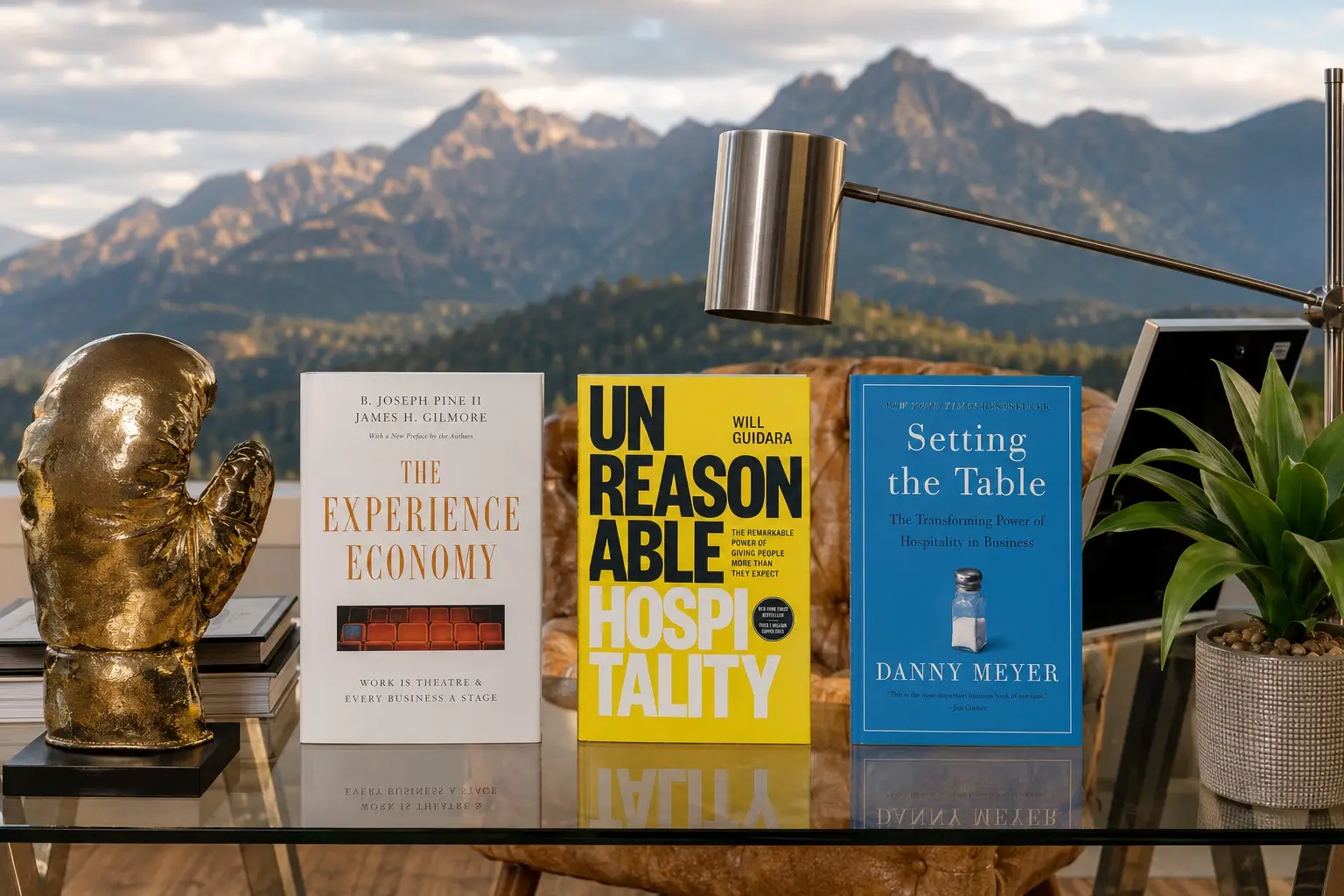
A reading list for the event leaders, event marketers, and GTM teams
Before I was building global B2B event programs for tech companies, I was working in luxury hospitality and experiential events, designing guest experiences for luxury hotels and global restaurant groups and learning firsthand what it actually takes to make someone feel something. Not just satisfied. Not just “that was good.” But genuinely, emotionally moved.
That background shaped everything about how I approach field marketing and B2B events. And honestly? I think it’s one of the most underrated advantages anyone can bring into this space.
Because here’s what I keep seeing: as AI accelerates, as digital channels get noisier, and as buyers grow more selective about where they give their attention, the event marketers who are winning are the ones who understand that we are not in the logistics business, we are in the human connection business. The memory business. The trust business.
And the best teachers for that? They’re not always in the B2B event playbook. Sometimes they’re running Michelin-starred restaurants. Sometimes they’re reimagining what a hotel stay could feel like. Sometimes they wrote a book in 1999 that the entire experience economy has been catching up to ever since.
Over 8 years building global B2B events, field marketing, user/flagship conferences, executive roundtables, and years before that in public relations, communications, trade marketing, luxury hospitality and experiential marketing, these are three books that have shaped the way I think, the way I build. If you’re serious about elevating events as a GTM lever, community builder, pipeline drive in 2026, I think they’ll do the same for you.
Let’s get into it!
The Experience Economy, Joseph Pine II & James H. Gilmore
This book changed how I think about planning. Pine and Gilmore’s argument, that businesses who design memorable experiences create exponentially more value than those simply delivering products or services, was published in 1999. But honestly, it reads like it was written for 2026. Their framework, often called the 4Es, suggest experiences fall into four categories: Entertainment, Educational, Escapist, Esthetic. This is the framework that is more relevant than ever. AI has commoditized content overnight. Digital marketing is noisier than ever. And buyers are more skeptical, more distracted, and more selective about where they give their time. That’s exactly why the smartest B2B marketing teams are going bigger on in-person, executive roundtables, curated dinners, flagship conferences, intimate customer communities. These aren’t nice-to-haves anymore. They’re an elite GTM strategy. The insight that drives everything: attendees don’t show up for slides or branded lanyards. They show up for access, identity, inspiration, and belonging. Engineer your events around that, and you start creating something customers genuinely want to be part of.
Unreasonable Hospitality, Will Guidara
I genuinely think every event and field marketer should read this Unreasonable Hospitality: Creativity and Intention in Pursuit of Relationships book immediately. Guidara ran one of the world’s best restaurants and built his legend on one radical distinction: the gap between service (giving people what they expect) and unreasonable hospitality (giving people a moment they will never, ever forget). Coming from luxury hotels and high-end experiential, this hit differently for me — because I’ve seen firsthand what happens when a team is obsessed with those unexpected moments. Guests don’t just come back. They talk. They bring people. They become advocates you couldn’t buy with any media budget. In B2B field marketing, that word-of-mouth is everything. And here’s what excites me most about this right now: AI is handling the routine. The follow-up emails, the scheduling, the content. Which means the best marketers have more time than ever to do something genuinely thoughtful instead. Anticipate. Know what your key accounts eat and drink before the roundtable. Send a follow thank you or special gift based on something specific to the conversation you actually had. Those are the moments that get screenshotted, shared, and remembered, and they cost nothing but intention. And it’s the one that always wins.
Setting The Table, Danny Meyer
This is the book I recommend to anyone who wants to understand why some event brands become institutions and others stay forgettable. Danny Meyer — NYC Restaurants — Union Square Hospitality Group philosophy, Enlightened Hospitality, is built on something beautifully counterintuitive: look after your team first, and they will naturally create extraordinary experiences for everyone else. A team that feels genuinely valued brings a warmth and energy into the room that no production budget can manufacture. I felt this deeply working across luxury hotels and global food brands before moving into B2B events. The best venues, the best events, the best brand experiences I’ve ever been part of all had the same thing in common: people backstage who actually cared. That energy is contagious and guests feel it immediately, even if they can’t articulate why. In field marketing, your event brand is built on every single touchpoint, from the first invite to the final follow-up. In an AI accelerated world where so much communication feels automated and transactional, the teams that lead with genuine human warmth are the ones building reputations that do the selling for them, and this book is one of the reasons I believe in it so deeply.
Happy reading!
Jodi xx
Greetings! Been using 289winbet for a couple of weeks now. Good range of bets and the odds are competitive. I might even keep playing there often 289winbet.
95y? Short and sweet. Wonder what this is all about. Gonna check it out. Give it a looksee yourself: 95y.
Seriously, forgetting passwords is my superpower. This pokerstarslogin link has saved my bacon so many times. Quick and easy login process, no messing about.
I was looking for a spot where the reels actually reward consistent play and fancywinwin delivered exactly what I needed. Customer service is friendly and the withdrawal queue moves surprisingly fast. fancywinwin
I have spent so many afternoons mining for gold and chasing those multiplier lines with my friends online. The graphics pop right off the screen and the gameplay feels completely fair every single round. It is my favorite way to unwind and try my luck without any hassle. minesjuego
Having a platform built with local payment methods in mind makes such a huge difference. The support team understands exactly what we need and responds right away. It really feels like a homegrown gem. phmasayagame
The atmosphere is electric and the games are truly engaging. I’ve had a few big wins here and the withdrawal process was a breeze. phfierycasino is the real deal!
Honestly I do not usually write reviews but the experience here is just too good to keep to myself. The interface feels super clean and I love how easy it is to jump between different games. Customer service gave me a warm welcome and even helped me pick my first move. Highly recommend it to anyone looking for a solid platform. in55ace
I downloaded the mobile version and it runs beautifully on my Android device. Navigation is intuitive and customer service is available around the clock whenever I need a hand. A trustworthy option for players on the go. vn7mtyso
Mobile gaming has never been this comfortable. I play on my commute and the interface loads instantly even on slower connections. The game library is massive and there is something for everyone whether you prefer classic table games or modern video slots. Really happy I found this spot. 90jillicasino
Finally found a source that actually works without any glitches. The download speed is impressive and the installation was a breeze. Big thanks to in7download for making this so easy.
The whole vibe here matches exactly what online gaming should be about. Games load instantly, payouts are transparent and I feel like my account is always handled with care. I keep bringing my friends along because it just works reliably every single time. vibescasino
As someone who follows European football closely I can say the odds here are extremely competitive. The registration process is quick and the payment options are fully secure with top encryption standards. I have been placing my weekly picks on this site and the experience has been flawless every single time. Come check the markets for yourself bectrisapuestas
VIP rewards here feel genuinely rewarding instead of just being fancy labels. I enjoy how the game selections keep fresh and the loyalty perks show up right when I need them. It truly feels like being part of an exclusive circle. Stop by lodiviplogin
Love how easy it is to navigate the site. I managed to hit a decent jackpot last night and the credit went straight to my account. phjili01 is definitely a winner.
The app version is just fantastic. It makes playing on the go so much easier and the graphics are crisp. Try jljl16applogin
[2147]ck 666 Official Login | সেরা অনলাইন স্লট ও দ্রুত বিকাশ পেমেন্ট,ck 666 অফিসিয়াল লগইন করে সেরা অনলাইন স্লট গেম খেলুন। অ্যাপ ডাউনলোড করুন এবং দ্রুত বিকাশ পেমেন্টের সুবিধা নিন। আজই যোগ দিয়ে গেম শুরু করুন। visit: ck 666
Really impressed with the bonuses they offer to new players. It gave me a great head start. You should definitely see what bdbaj777 has to offer.
[7636]Xstp2 – Link vào tải app và chơi baccarat online uy tín,xstp2 cung cấp link vào chính thức để tải app nhanh chóng. Trải nghiệm game quay hũ đổi thưởng và nạp tiền casino qua momo dễ dàng. Truy cập ngay để chơi! visit: xstp2
Finally found a platform that actually pays out on time. The customer support is also very helpful and friendly. Highly recommend phjilipark311 to all my fellow players.
I’ve tried a few platforms lately, but this one really stands out. The interface is super smooth and the payouts are fast. Definitely my new go-to spot! Check out idmega303 for a great experience.
The game variety here is insane! I spent all night exploring the slots and the graphics are top notch. ph7777casino is definitely my new favorite hangout.
I’ve been trying a few different sites lately and this one really stands out. The payouts are fast and the interface is super smooth. Definitely recommend checking out br55cbet if you want a reliable spot.
[6625]jetsetspins login করুন ও বিকাশ দিয়ে ক্যাসিনো ডিপোজিট করুন,jetsetspins-এ লগইন করে অনলাইন স্লট গেম নিয়ম জানুন এবং দ্রুত jetsetspins app download করুন। বিকাশ দিয়ে সহজ ডিপোজিট করে আজই খেলা শুরু করুন। visit: jetsetspins
Great odds and fast payouts. I had a few questions and the support team handled them quickly. If you want a winning streak try brbet959win.